Buprenorphine Kansas City
Effective Treatment for Opioid Use Disorder
If you struggle with opioid use disorder (OUD), you can be sure that our Kansas City medical team has great compassion for you. We want to help! We may determine that you are a candidate for medication-assisted treatment. Specifically, we might prescribe buprenorphine for you. What is buprenorphine, and how does it work? This page explains some important details.
What Is Buprenorphine?

Buprenorphine is an FDA-approved medication for treating pain and opioid use disorder. It is a partial opioid agonist. It binds to some of the same receptors as opioid medications, meaning that it can produce a similar, but much more subtle, effect. Buprenorphine causes mild euphoria, which means it can reduce cravings for stronger drugs and help patients move toward freedom from substance abuse.
Buprenorphine is classified as a schedule III substance, meaning that it has a lower potential for abuse and dependance than full opioid agonists, such as methadone (which is a schedule II substance).
How Is Buprenorphine Administered?
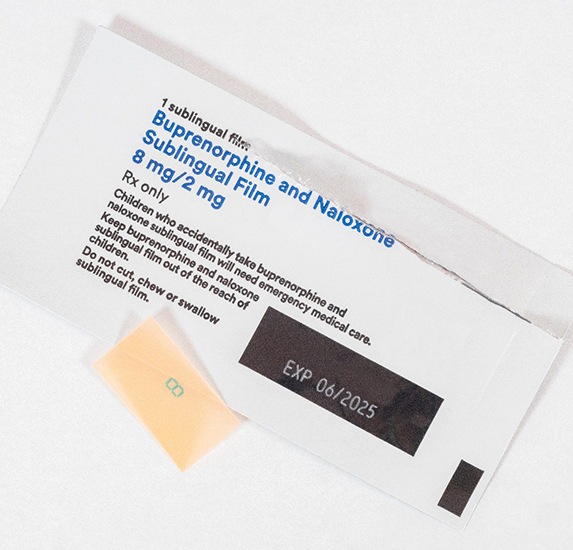
Buprenorphine can be administered in different ways. For example, it might be prescribed in the form of a sublingual tablet or film, which gets placed under the tongue so it can be released into the bloodstream. It may also come in the form of a transdermal patch, which passes the medication through the skin. Some patients are prescribed weekly or monthly buprenorphine injections.
When getting started with buprenorphine, patients should be in the early stages of opioid withdrawal (12 – 24 hours since their last use of opioids). If you have opioids in your bloodstream when you take buprenorphine, it increases the risk of acute withdrawal symptoms.
Buprenorphine is a long-acting medication. Some patients take it daily, but depending on your response to it, you might be able to switch to alternate-day dosing. Depending on your needs, you may use this medication on a long-term basis to reduce the risk of relapse.
What Are the Benefits of Buprenorphine?

Buprenorphine offers several benefits:
- It can be prescribed in physician offices, making it more widely available than full opioid agonists.
- It has less potential for abuse than opioids and full opioid agonists.
- Combined with behavioral therapy, buprenorphine can contribute to long-term freedom from OUD.
- Most employment drug tests do not detect buprenorphine, so it should not affect your job prospects.
- When it is used as directed, buprenorphine is generally safe and effective.
- Some people experience side effects with buprenorphine, but for most patients, this medication is easy to tolerate and can be used as a long-term treatment for OUD.
Buprenorphine FAQs
Can I Become Addicted to Buprenorphine?
Those taking buprenorphine for treatment aren’t likely to become addicted to it. In fact, it actually has a lower potential for abuse than full opioid agonists.
Buprenorphine is prescribed under the supervision of medical specialists. As such, patients are closely monitored as the drug is administered in treatment centers. This monitoring ensures your odds of addiction are extremely low, almost to the point of being zero.
Note also that buprenorphine is only a partial opioid agonist. Unlike full agonists, it doesn’t produce the same level of “high” that often causes addiction. The medicine only triggers a mild euphoria that helps reduce cravings for the harder stuff.
How Long Will I Need to Take Buprenorphine?
Buprenorphine is safe to take long-term, but it isn't always necessary that you do so. How much time you need with this drug depends on your case, the supervising specialist, and other factors. Given these facts, you can only get a timeline estimate by consulting Nurse Laura and our team.
Rest assured that you have a say in the overall treatment timeline. As we work with you, we’ll customize a plan that matches your goals and requirements. You can trust us to make your treatment experience as convenient and manageable as possible.
When Will Buprenorphine Make Me Feel Better?
Patients can vary in when they respond to this medication. That said, the deciding factor is usually the type of buprenorphine taken.
Consider a buprenorphine injection, for example. It administers the drug into your bloodstream, so it works incredibly quickly and “kicks in” within moments. The only caveat is that each injection must be supervised by a specialist, meaning you can’t (fully) control when you get it.
On the other hand, buprenorphine tablets take an hour or two to work. That’s because a tablet needs time to dissolve and pass through your body.
Does Buprenorphine Have Long-Term Side Effects?
Buprenorphine seldom carries immediate side effects. That said, long-term side effects are a somewhat different story; they’re rare but do sometimes occur.
For instance, long-term users may develop a tolerance to buprenorphine. Such patients will find that the drug slowly becomes less effective at previously-helpful dosages. In such cases, one may have to take a larger amount of buprenorphine as part of treatment.
Some people may become more sensitive to pain while taking buprenorphine. If you’re one such person, consult the supervising specialist about gradually reducing your dose. Doing so should help you manage your symptoms.
Contact Us for Details

Buprenorphine is just one medication that our team sometimes uses to help patients reclaim their health and start living a life that is free of substance abuse. If you would like to learn more about it, or you are ready to consult with our team about treatment options, contact B&L Medical Group in Kansas City at 913-713-1238.